
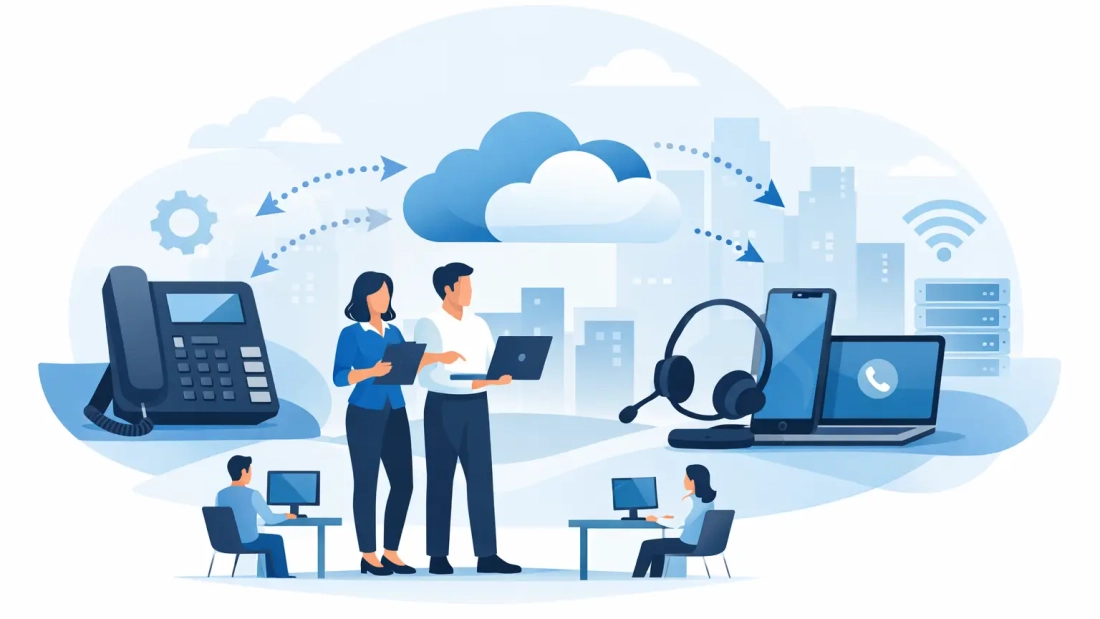
A phone-system migration is not just an IT project. It affects the front desk answering customers, sales teams returning calls, managers handling urgent issues, and remote employees who need the same business number wherever they work. If the transition is rushed, missed calls and unclear routing can disrupt business long after the new phones are installed.
Knowing how to migrate a business phone system starts with treating voice service as an operational dependency. The goal is not simply to replace old desk phones or lower a monthly bill. The goal is to move to a system that supports reliable calling, clear accountability, and continuity without interrupting the people who depend on it.
Start With an Accurate Phone System Inventory
Before selecting a hosted PBX or VoIP provider, document how your current phone environment actually works. Many businesses discover that their setup is more complicated than expected. A main number may have multiple auto-attendant menus, hunt groups, after-hours rules, call forwarding arrangements, analog devices, and numbers published on marketing materials.
Record every active phone number, including direct-dial numbers, toll-free numbers, fax lines, alarm lines, elevator phones, and conference-room devices. Identify which numbers must be kept and which can be retired. Losing a number that customers have used for years can create avoidable confusion, especially for medical offices, law firms, property managers, and service businesses.
Also map each call path. Document what happens when someone calls your main number during business hours, after hours, on holidays, or when a department does not answer. Include voicemail destinations, shared inboxes, paging groups, and escalation rules. This becomes the working blueprint for the new system.
Confirm That Your Network Is Ready for Cloud Voice
A cloud phone system depends on the network behind it. If your internet connection struggles with video meetings, cloud backups, or large file transfers, adding voice traffic without planning can lead to choppy audio, delay, and dropped calls.
Bandwidth matters, but it is not the only consideration. Voice quality is also affected by latency, jitter, packet loss, Wi-Fi coverage, firewall configuration, and the number of simultaneous calls your team expects to handle. A small office with five employees has different requirements than a multi-location organization with dozens of users taking calls at the same time.
For a South Florida business, evaluate the connection serving each office rather than assuming all locations have the same capability. Fiber internet with symmetrical upload and download speeds can support cloud applications and voice traffic more consistently than consumer-grade service. It also gives IT teams more room to prioritize critical traffic when the office is busy.
Ask the provider how voice traffic will be handled. Quality-of-service settings can prioritize calls over nonessential traffic, while a managed router or properly configured firewall can reduce avoidable problems. If your business relies heavily on wireless devices, test Wi-Fi coverage in conference rooms, warehouses, reception areas, and other places where employees answer calls.
Build a Migration Plan Before You Port Numbers
Number porting is the process of moving existing business phone numbers from one carrier to another. It is a central part of how to migrate a business phone system, but it should not be the first action you take. The new call flows, users, devices, and emergency-service information should be prepared before the port date is confirmed.
Start by deciding how each employee will make and receive calls. Some employees may need desk phones, while others may work effectively through a desktop app or mobile app. Receptionists and call-heavy departments often benefit from purpose-built phones, sidecar modules, and visible presence information. Field teams may need a mobile-first setup that keeps their personal number private while displaying the company caller ID.
Then establish the essential configuration details: business hours, holiday schedules, voicemail policies, call queues, department groups, caller ID rules, and ring strategies. Be specific about what should happen when a call is not answered. Should it roll to another employee, go to a shared voicemail box, transfer to an after-hours service, or route to an emergency contact?
Emergency calling deserves special attention. Each phone or softphone user should have accurate registered location information so emergency responders receive the correct address. This is especially important for organizations with multiple offices, remote employees, or employees who move devices between locations.
Choose a Cutover Window That Protects Operations
The right cutover time depends on your business. A professional office may prefer an evening or weekend migration. A hotel, healthcare facility, restaurant group, or 24-hour operation may need a staged plan that maintains live coverage throughout the transition.
Avoid scheduling the change during payroll deadlines, major events, seasonal peaks, or periods when key staff are unavailable. Assign a business owner, an IT contact, and a provider contact who can make decisions quickly if an issue appears. Everyone should know the cutover time, which phones will be affected, and how to get help.
A phased deployment is often safer for larger organizations. You can configure and test a pilot group first, then move departments or locations in manageable waves. This approach gives users time to adjust and exposes routing or training gaps before every number is live on the new platform.
Test the New System Like a Customer Would
Do not assume a successful login means the migration is complete. Before and immediately after the port, place real test calls from outside numbers. Call the main line, direct extensions, department queues, and any toll-free numbers. Test calls during open and closed hours, and verify that holiday and after-hours routing work as intended.
Check more than basic inbound calling. Test outbound caller ID, voicemail delivery, voicemail-to-email notifications, transfers, conference calling, call parking, mobile apps, and receptionist functions. Confirm that calls to emergency numbers follow your provider’s testing process and that each location is correctly represented in the system.
Create a short acceptance checklist for the people who use the system most. A receptionist should test menus, transfers, hold music, and queues. A sales representative should test the mobile app, outbound caller ID, and voicemail. A manager should verify reports, admin access, and after-hours notifications. This is more useful than having one person declare the system ready from an IT perspective alone.
Train Users on the Few Features That Matter Most
A new phone system can improve productivity, but only if employees know how to use it. Training does not need to be lengthy. It should focus on the actions users perform every day: answering and transferring calls, checking voicemail, setting availability, using the mobile app, joining a conference call, and updating a greeting.
Give each team a simple reference tailored to its role. Reception staff need different instructions than remote employees or warehouse personnel. Managers should understand how to adjust business hours, review call activity, and respond when an employee changes roles or leaves the company.
Set expectations for mobile and remote calling as well. Employees should know when to use the business app, how caller ID appears, and what to do if their home internet or mobile signal is unreliable. A business continuity plan may include forwarding options, alternate devices, or temporary routing rules during an office outage.
Plan for What Happens After Go-Live
The first week after a migration is where small configuration issues become visible. Monitor call quality, missed-call reports, queue performance, and user questions closely. Review whether calls are reaching the right departments and whether any common issue points to a training gap or routing change.
Keep your old service active only as long as necessary and only where it does not conflict with the ported configuration. Your provider should clearly explain the port completion process, remaining equipment responsibilities, and any services that must be canceled separately.
A well-planned phone migration gives your business more than new hardware or a different app. It gives employees a dependable way to communicate from the office, home, or field while customers continue reaching the right person. For South Florida organizations, a local partner such as AWBC can help align cloud voice, business fiber, and practical support around the way your operation actually works.